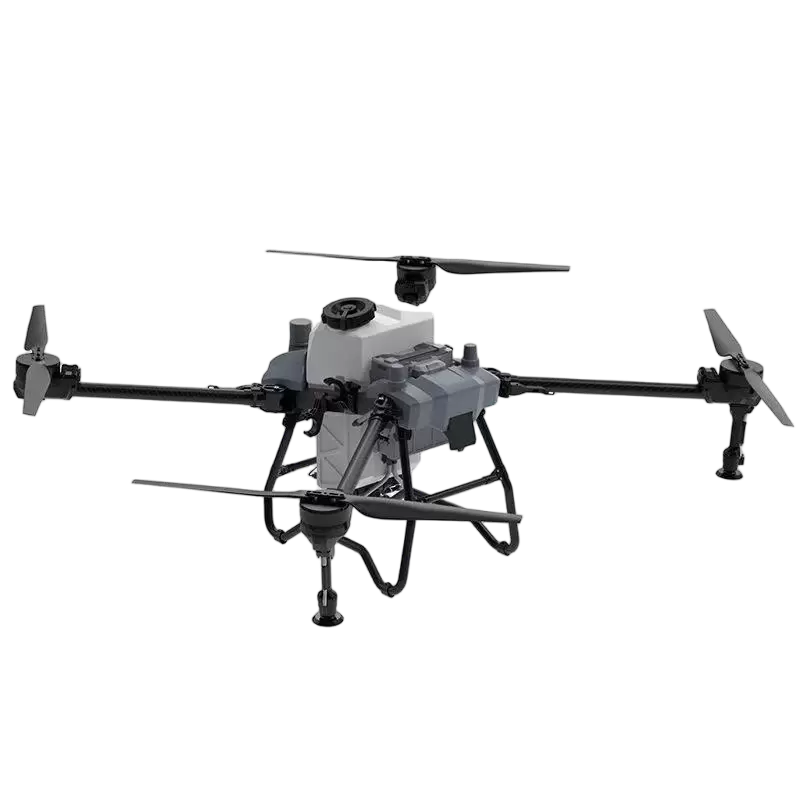
As UAV applications move deeper into firefighting, emergency response, and industrial inspection, Multi-rotor Drone High Quality is increasingly defined by system redundancy, control architecture robustness, and power distribution stability rather than basic flight capability.
In mission-critical environments, failure is not an option. UAV systems must maintain controlled flight even under partial subsystem degradation, high environmental stress, or communication instability.
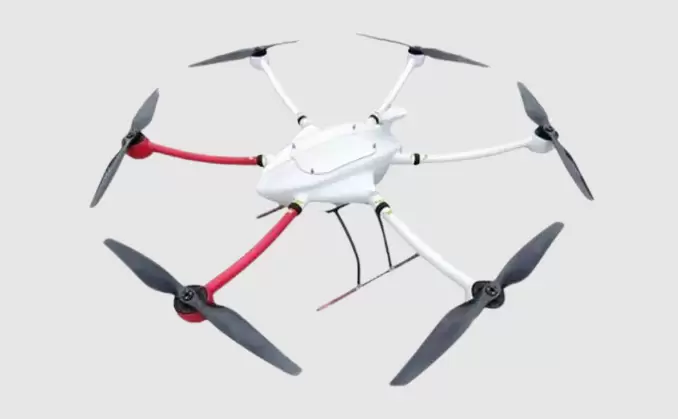
Redundancy Architecture as a Reliability Foundation
Industrial multi-rotor systems typically adopt:
- hexacopter (6-rotor) or octocopter (8-rotor) configurations
- redundant flight control pathways
- dual sensor IMU architectures
- backup communication links
This redundancy enables degraded but controlled operation when partial system failure occurs.
For example:
- octocopter systems can maintain controlled descent after a single motor failure
- hexacopters can redistribute thrust load to maintain limited stability
This capability is essential in firefighting UAVs operating near high-temperature zones or unstable airflow conditions.
Power Distribution Stability Under High Load
Power architecture is a critical determinant of UAV reliability.
Key system parameters include:
- battery architecture: 6S–14S configurations
- peak current handling: 100A+ per power channel in heavy-lift systems
- voltage stability under dynamic acceleration
- resistance optimization across power lines
Poor power distribution leads to:
- uneven motor thrust output
- localized overheating
- unstable flight response during load transitions
Optimized systems use:
- low-resistance copper bus structures
- distributed ESC power nodes
- symmetrical wiring layouts for load balancing
Flight Control Logic and Stability Management
Flight control systems govern real-time UAV behavior through multi-loop control architecture.
Typical control structure includes:
- attitude stabilization loop (high frequency, up to 1 kHz)
- position control loop (medium frequency)
- mission-level navigation logic
Advanced control algorithms implement:
- adaptive PID tuning based on payload mass
- model-based disturbance compensation
- real-time trajectory correction under wind load
Without adaptive control, UAVs exhibit drift, oscillation, or delayed response under dynamic conditions.
Propulsion Matching and System Efficiency
Motor and propeller matching directly affects UAV efficiency.
Key design parameters:
- propeller diameter: 18–40 inches depending on payload class
- blade pitch optimization for thrust-to-efficiency balance
- motor KV matching for load-specific performance
Mismatch between motor KV and propeller load results in:
- excessive current draw
- thermal stress increase
- reduced flight endurance
Proper matching ensures:
- stable hover efficiency
- optimized energy consumption
- smoother acceleration response
Communication Reliability and Signal Integrity
Control link stability is essential for mission execution.
Key communication characteristics:
- latency under 50 ms in industrial systems
- dual-band redundancy (2.4 GHz / 5.8 GHz)
- frequency hopping anti-interference systems
Fail-safe behaviors include:
- automatic return-to-home
- controlled landing protocols
- mission pause and hold states
In firefighting environments, signal disruption risk is significantly higher due to structural interference and electromagnetic noise.
Thermal Stress Distribution Across System Components
Thermal management must address multiple subsystems simultaneously:
- motor winding temperature
- ESC switching heat
- battery discharge heating
Thermal imbalance can cause:
- thrust inconsistency between rotors
- reduced ESC efficiency
- accelerated battery degradation
Design strategies include:
- airflow-guided frame geometry
- heat-dissipating aluminum motor mounts
- temperature-aware power throttling
Environmental Hardening for Industrial Deployment
Multi-rotor Drone High Quality systems must tolerate:
- moisture and rain exposure
- particulate-heavy environments (smoke, dust)
- extreme temperature ranges
- electromagnetic interference
Protection solutions:
- IP54–IP67 structural sealing
- conformal coating on PCB assemblies
- corrosion-resistant mechanical fasteners
Environmental resilience ensures consistent mission performance in unpredictable conditions.
Payload System Integration Flexibility
Industrial UAV platforms often support modular payloads:
- firefighting suppression modules
- thermal imaging systems
- communication relay devices
- sensor payload arrays
Payload variation affects:
- center of gravity alignment
- thrust distribution symmetry
- flight dynamics response
A well-designed system maintains stability without requiring major reconfiguration between payload types.
Manufacturing Precision and Fleet Consistency
Industrial UAV deployments require consistent behavior across multiple units.
Critical manufacturing controls include:
- motor winding precision
- propeller balancing tolerance
- ESC calibration uniformity
- frame structural alignment accuracy
Even minor inconsistencies can lead to:
- different flight response profiles
- inconsistent control tuning requirements
- reduced fleet-level operational reliability
Engineering Integration Capability
Companies such as Jiangxi BonSure Technology Co., Ltd specialize in integrated firefighting UAV systems and high-performance propulsion technologies, combining motor engineering with complete drone platform design to ensure optimized system-level performance.
Conclusion
Multi-rotor Drone High Quality systems are defined by redundancy architecture, propulsion efficiency, control stability, and environmental resilience. As UAV applications expand into mission-critical industrial domains, system-level engineering integration becomes the decisive factor for reliability, safety, and operational success.