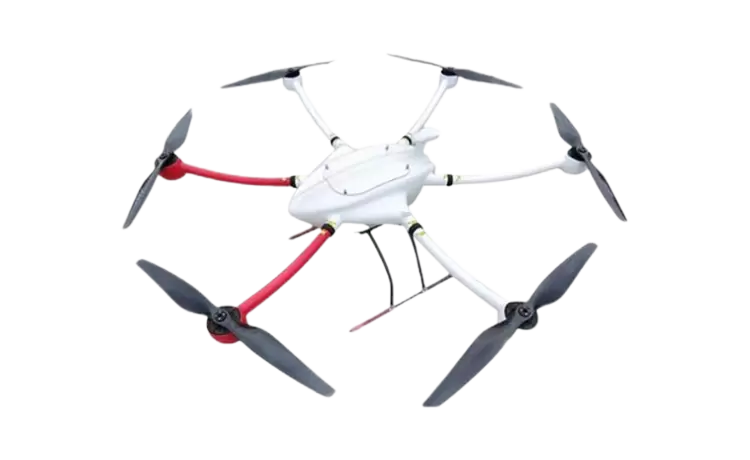
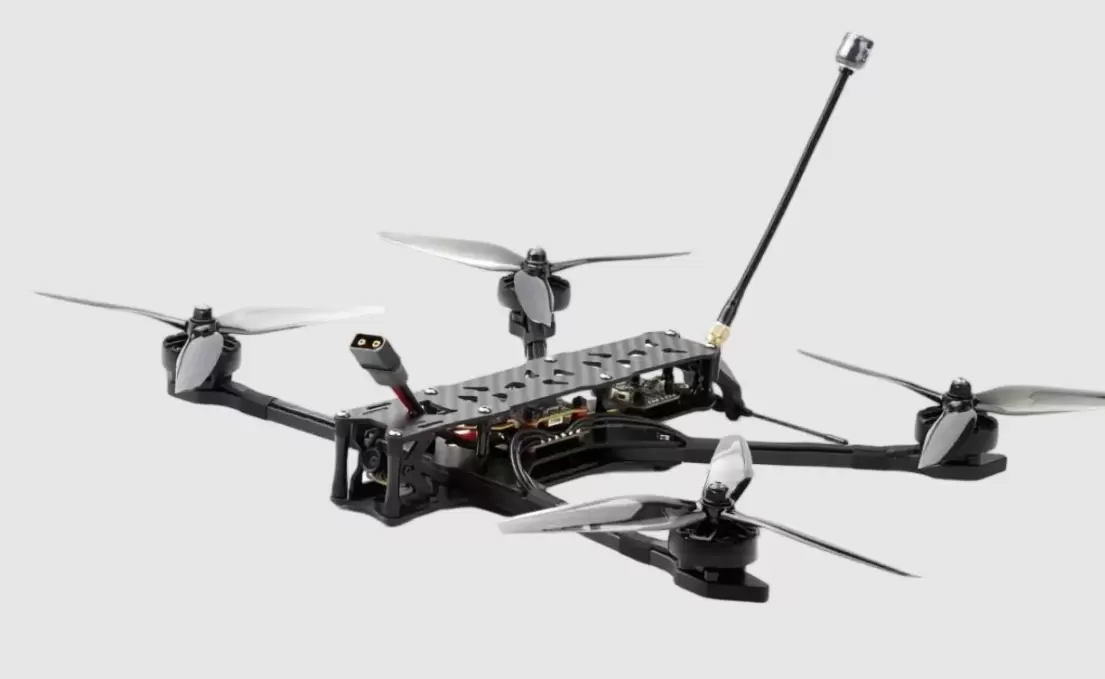
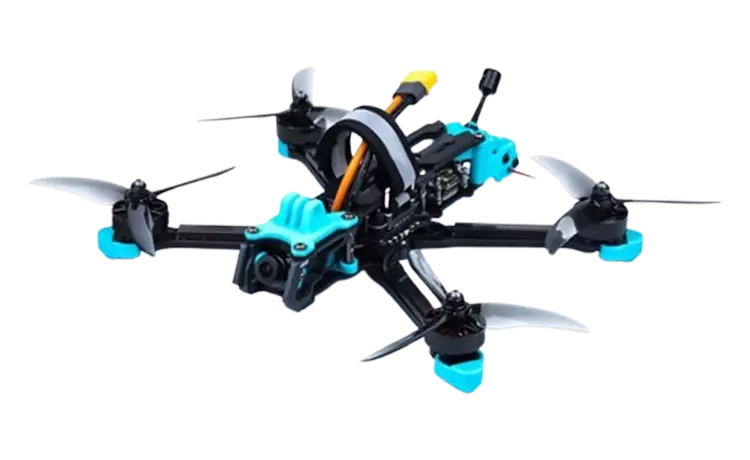
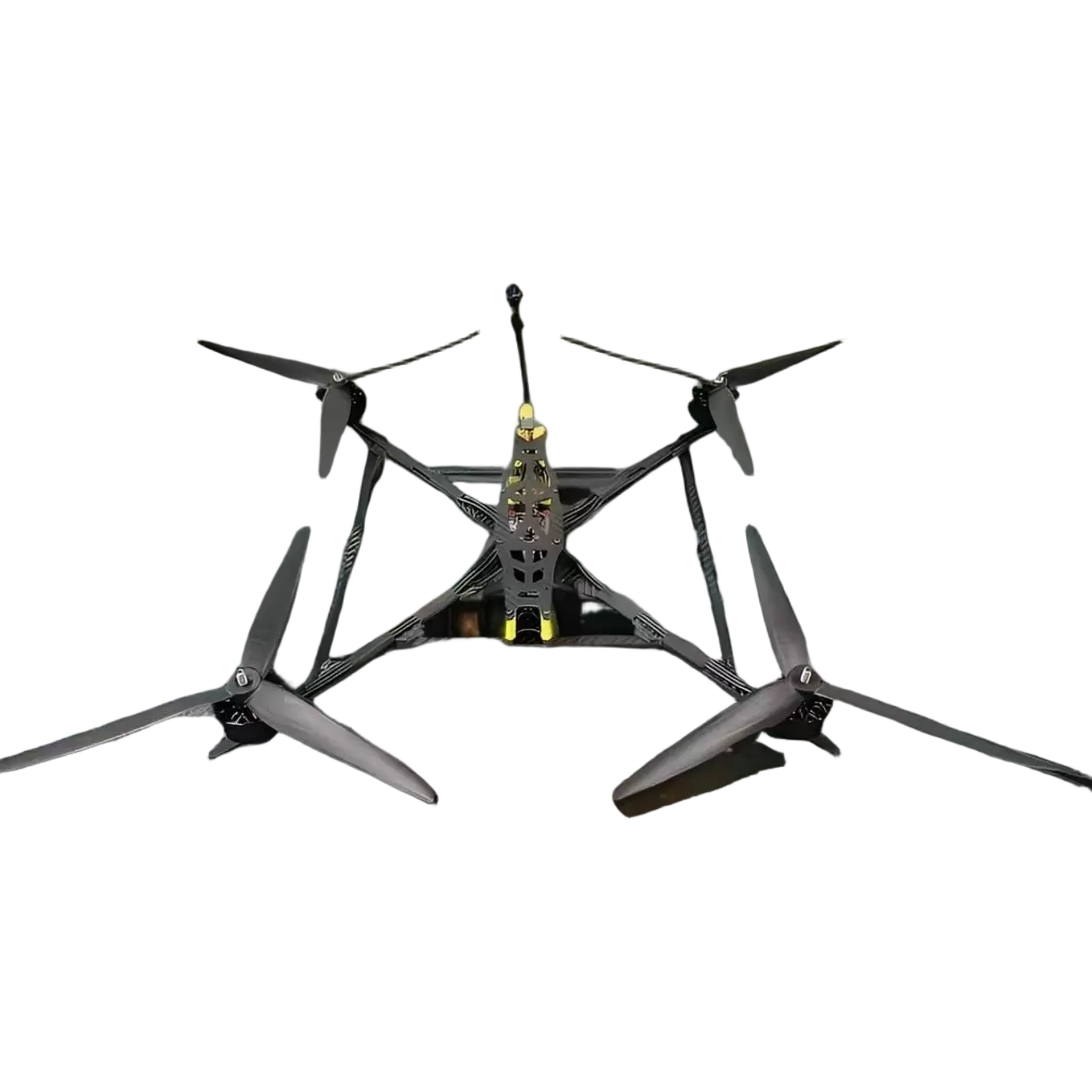
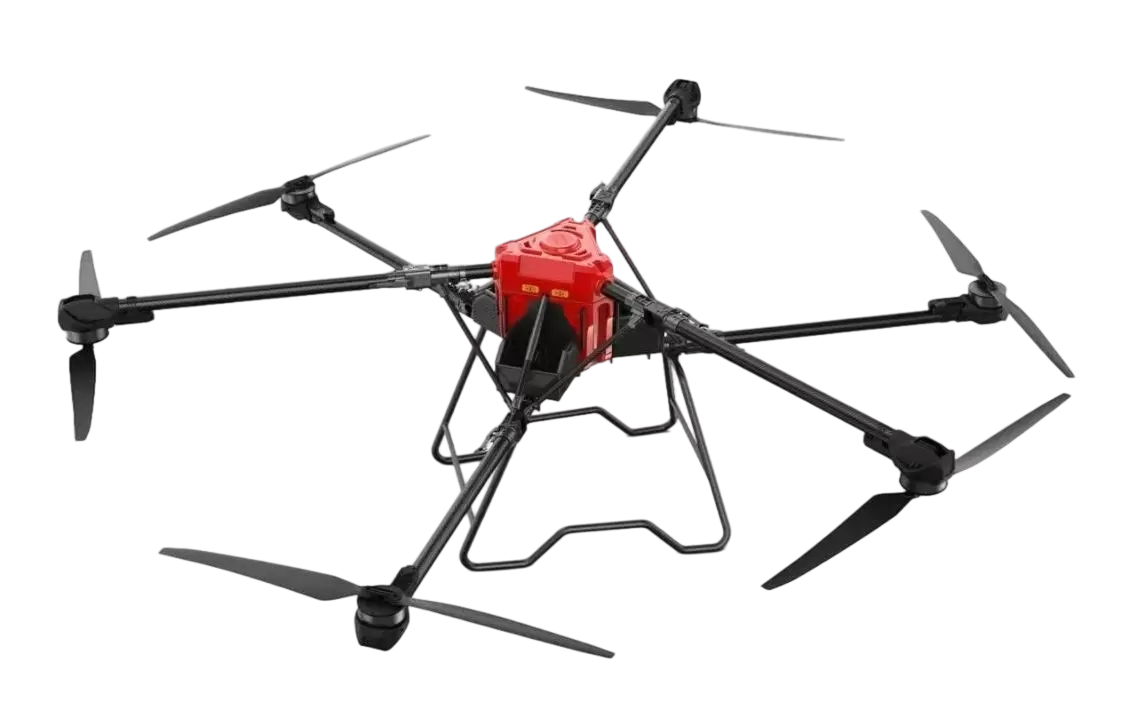
In modern UAV engineering, especially in industrial and emergency-response applications, the term Multi-rotor Drone High Quality is no longer defined by basic flight capability. It is defined by system-level performance stability, powertrain efficiency, flight control precision, and structural reliability under demanding operational conditions.
Firefighting missions, rescue operations, industrial inspection, and payload delivery all require multi-rotor platforms that can maintain stable flight under high load variation, strong wind conditions, and extended mission durations. In these environments, small inefficiencies in propulsion systems or control response can directly impact mission success.
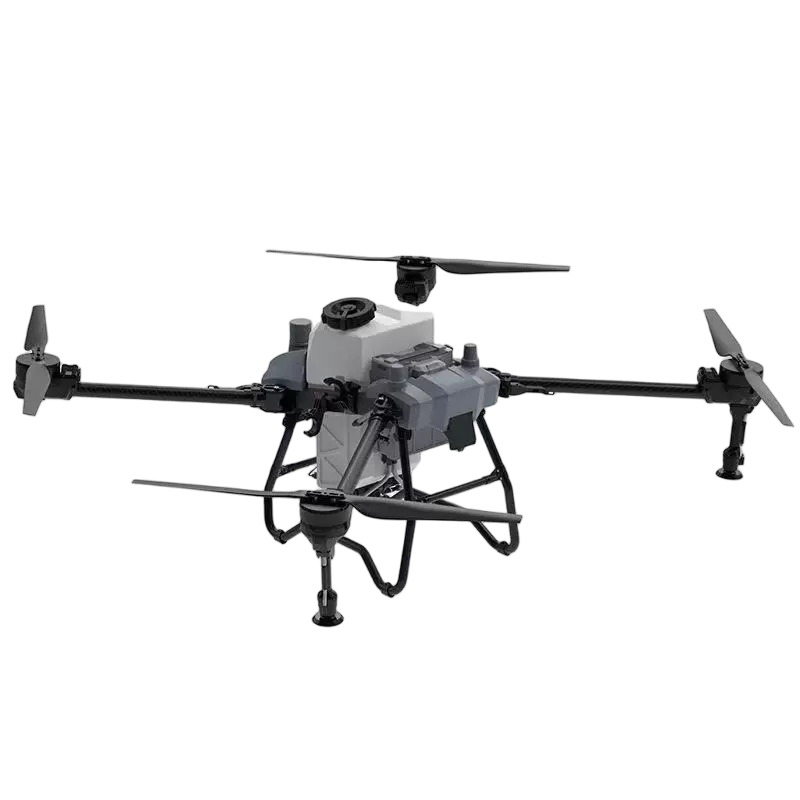
A high-quality multi-rotor drone is therefore not a single product—it is a tightly integrated system combining propulsion, aerodynamics, control algorithms, energy management, and structural engineering.
Why Powertrain Quality Defines Drone Performance
At the core of any Multi-rotor Drone High Quality system is its propulsion architecture, typically composed of:
- high-efficiency brushless DC (BLDC) motors,
- electronic speed controllers (ESC),
- propeller systems,
- and optimized power distribution modules.
Among these, the motor is the primary determinant of thrust stability and energy efficiency.
Key performance parameters include:
- thrust-to-weight ratio (commonly 2:1 to 5:1 depending on application),
- motor KV rating (e.g., 100–500 KV for heavy lift systems),
- continuous current handling (20A–120A+ depending on class),
- and thermal efficiency under sustained load.
In firefighting UAVs, payload systems such as water tanks or extinguishing agents significantly increase thrust demand variability. A stable propulsion system ensures consistent lift even during rapid payload weight changes.
Thrust Stability Under Dynamic Load Conditions
Unlike consumer drones, industrial multi-rotor systems operate under highly dynamic conditions.
Typical load variations include:
- payload release during firefighting drops,
- wind gust compensation in outdoor environments,
- uneven weight distribution during rescue missions,
- and battery discharge-induced voltage variation.
A high-quality multi-rotor drone must maintain stable thrust output despite these fluctuations.
Advanced brushless motor systems achieve this through:
- optimized stator winding density,
- high-grade neodymium magnet configuration,
- and low cogging torque rotor design.
ESC firmware also plays a critical role by providing:
- real-time PWM frequency adjustment (up to 48–96 kHz in advanced systems),
- active braking control,
- and closed-loop motor synchronization.
These factors collectively determine flight stability during complex missions.
Energy Efficiency and Flight Endurance Optimization
Flight time is one of the most critical performance indicators in Multi-rotor Drone High Quality systems.
Energy efficiency depends on:
- motor efficiency curves (peak efficiency often 85%–92%),
- propeller aerodynamic design,
- total system weight optimization,
- and battery discharge management.
Even small efficiency improvements can significantly extend mission duration.
For example:
- a 5% improvement in propulsion efficiency may translate into several additional minutes of flight time in heavy-lift drones,
- which can be mission-critical in firefighting or rescue operations.
Efficient systems minimize:
- heat generation,
- electrical losses,
- and unnecessary current spikes during maneuvering.
Thermal Management in High-Power Drone Systems
High-performance multi-rotor drones operate under sustained high current loads, especially in heavy payload or emergency response scenarios.
Thermal risks include:
- motor overheating,
- ESC thermal throttling,
- and battery performance degradation.
Typical safe operating temperatures:
- BLDC motor: 60°C–90°C depending on insulation class,
- ESC: below 100°C for long-term reliability,
- battery pack: optimal range 20°C–45°C.
Thermal management strategies include:
- high-conductivity aluminum motor housings,
- airflow-optimized motor placement,
- heat-resistant winding insulation (Class F or H),
- and intelligent ESC thermal protection algorithms.
Without effective thermal design, system performance degrades rapidly under continuous operation.
Structural Design and Vibration Control
Multi-rotor drones are inherently sensitive to vibration, which directly affects:
- flight controller stability,
- sensor accuracy,
- and image or payload precision systems.
Sources of vibration include:
- motor imbalance,
- propeller deformation,
- frame resonance,
- and airflow turbulence.
High-quality drone systems mitigate vibration through:
- precision CNC-machined motor shafts,
- dynamically balanced propellers,
- carbon fiber airframe structures,
- and vibration-damping mounting systems for flight controllers.
Excessive vibration can lead to:
- navigation drift,
- reduced stabilization accuracy,
- and premature component wear.
ESC Performance and Motor Synchronization
Electronic Speed Controllers are responsible for translating flight controller commands into precise motor speed adjustments.
Key ESC performance metrics include:
- maximum continuous current rating,
- switching frequency (typically 24–96 kHz),
- response latency (<1 ms in high-performance systems),
- and thermal efficiency.
In multi-rotor systems, synchronized ESC response is critical.
Poor synchronization can result in:
- yaw instability,
- uneven thrust distribution,
- and control oscillations during aggressive maneuvers.
High-quality ESC systems use:
- sinusoidal or FOC (Field-Oriented Control) algorithms,
- real-time current sensing,
- and adaptive tuning based on load conditions.
Flight Control System Integration
A Multi-rotor Drone High Quality platform depends heavily on flight controller integration.
Key functions include:
- attitude stabilization (pitch, roll, yaw control),
- GPS-assisted navigation,
- autonomous mission execution,
- and real-time sensor fusion.
Advanced systems integrate:
- IMU (Inertial Measurement Unit),
- barometer,
- magnetometer,
- and RTK GPS modules for centimeter-level positioning accuracy.
Sensor fusion algorithms ensure stable flight even under:
- wind disturbance,
- payload shift,
- or GPS signal degradation.
Payload System Integration in Industrial UAVs
In firefighting and rescue applications, drones often carry:
- water or foam dispensers,
- thermal imaging cameras,
- communication relay systems,
- or cargo delivery modules.
Payload integration affects:
- center of gravity stability,
- thrust distribution,
- and flight dynamics.
A well-designed Multi-rotor Drone High Quality system ensures modular payload compatibility without compromising aerodynamic efficiency.
Battery System Performance and Discharge Behavior
Battery systems are a critical limiting factor in UAV performance.
Key parameters include:
- energy density (Wh/kg),
- discharge rate (C-rating),
- voltage stability under load,
- and cycle life.
High-load drones often require:
- 10C–25C discharge capability,
- low internal resistance cells,
- and intelligent battery management systems (BMS).
Voltage sag during high thrust demand can directly affect motor output and flight stability.
Environmental Adaptability and Operational Reliability
Industrial UAV systems must operate in challenging environments such as:
- high humidity,
- strong wind conditions,
- temperature extremes,
- and smoke or particulate exposure (firefighting scenarios).
Protection requirements include:
- IP-rated enclosures,
- corrosion-resistant coatings,
- sealed motor bearings,
- and reinforced electronic housings.
Environmental robustness directly determines mission reliability.
Company Capability and Engineering Focus
Companies such as Jiangxi BonSure Technology Co., Ltd specialize in firefighting UAV systems and high-performance brushless motor propulsion systems. Their integrated approach combines UAV design and motor engineering to support high-quality multi-rotor platforms for industrial and emergency applications.
This vertically integrated capability reflects the industry trend toward system-level UAV engineering rather than isolated component design.
Conclusion
A Multi-rotor Drone High Quality system is defined by the integration of propulsion efficiency, flight stability, thermal control, vibration management, and intelligent control systems.
As UAV applications expand into firefighting, rescue, industrial inspection, and logistics, the demand for high-performance, mission-critical multi-rotor systems will continue to increase, pushing the industry toward deeper engineering integration and higher reliability standards.