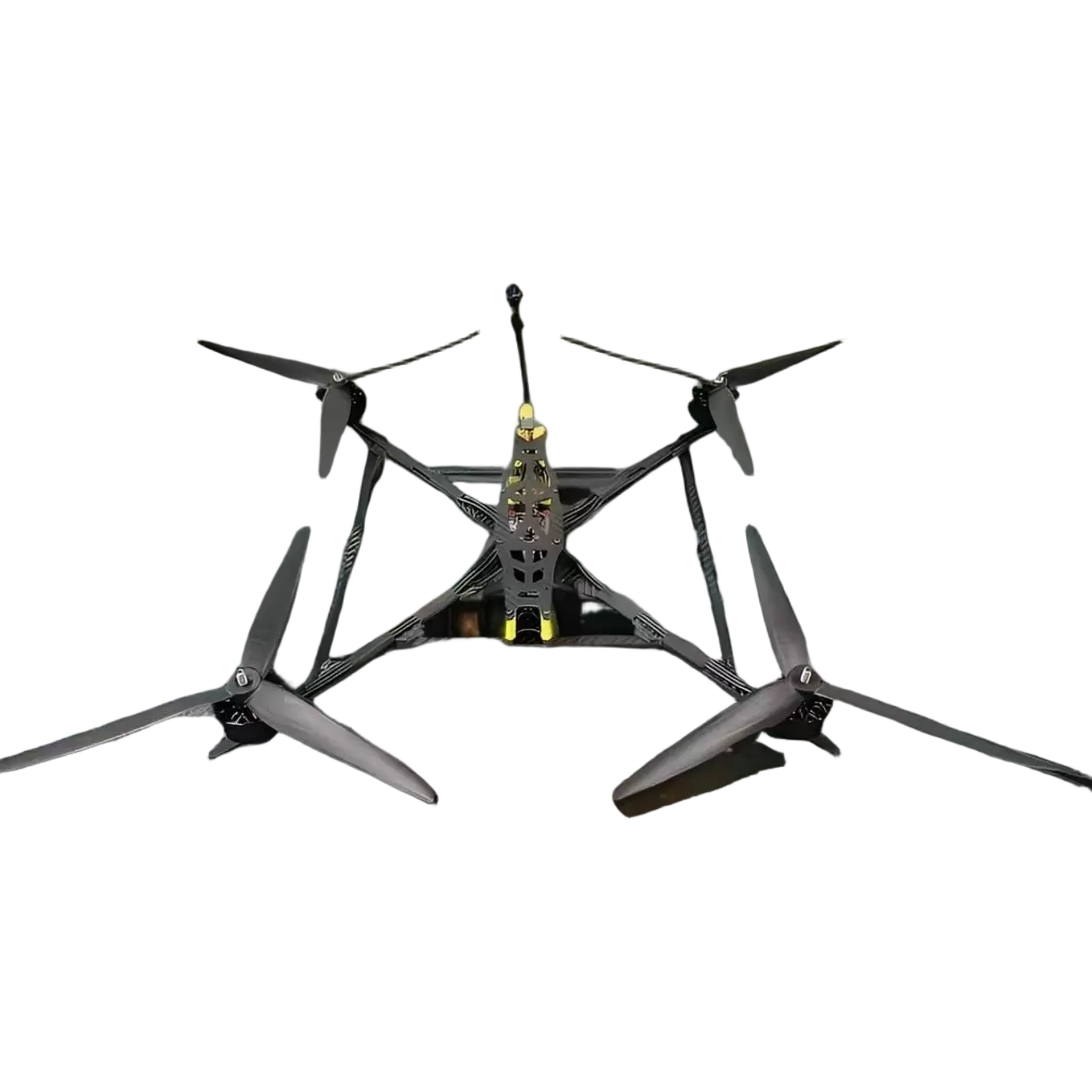
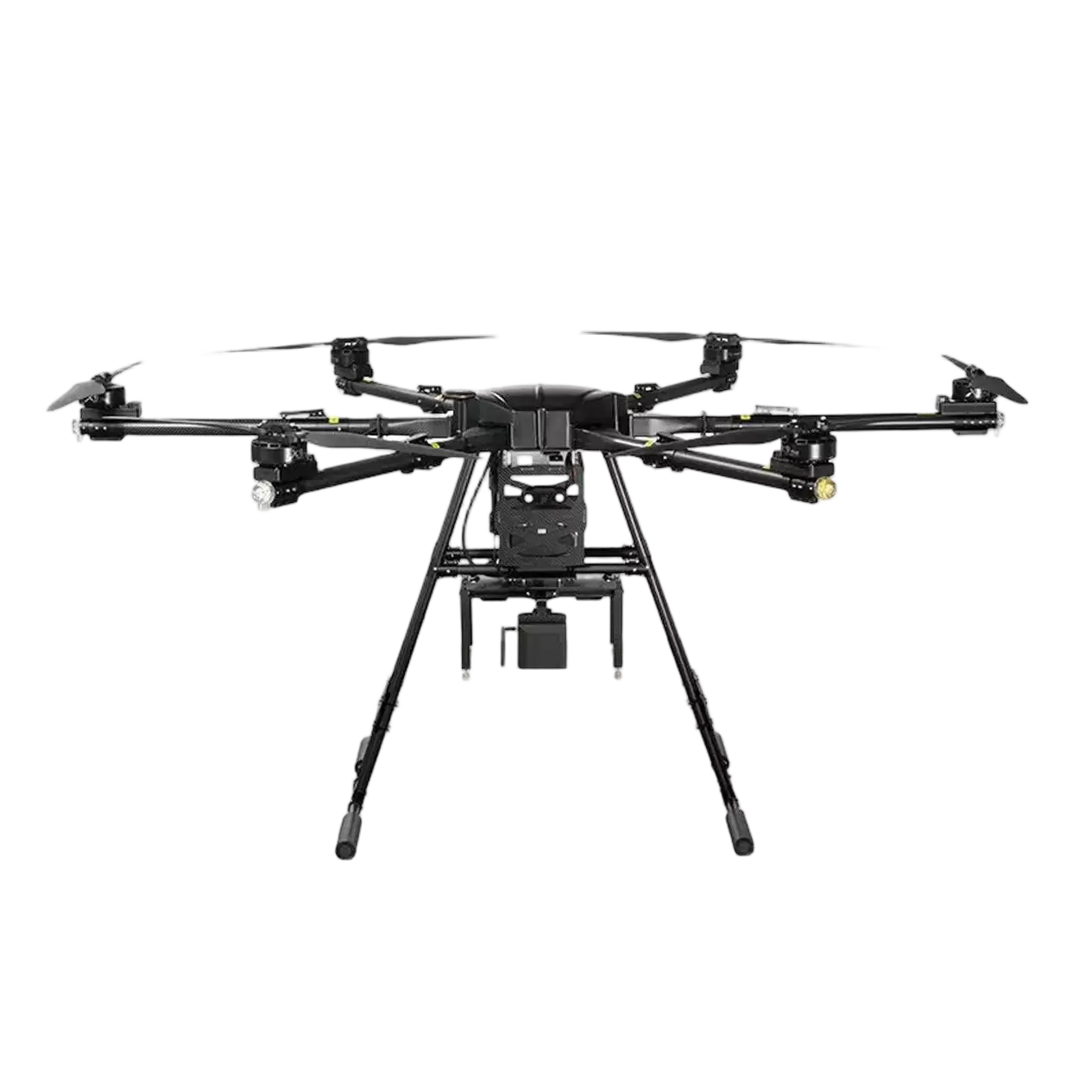
In prolonged firefighting and rescue missions, endurance and power stability are often more critical than peak performance. While imaging and payload capabilities define what a drone can do, its energy system determines how long it can sustain operations in real-world conditions.
For fire and rescue drones, battery architecture, power distribution, and propulsion efficiency directly impact mission continuity, especially in large-scale incidents such as wildfires, industrial fires, and disaster recovery operations.
This article focuses on the engineering principles behind power systems and endurance optimization in fire and rescue drones.
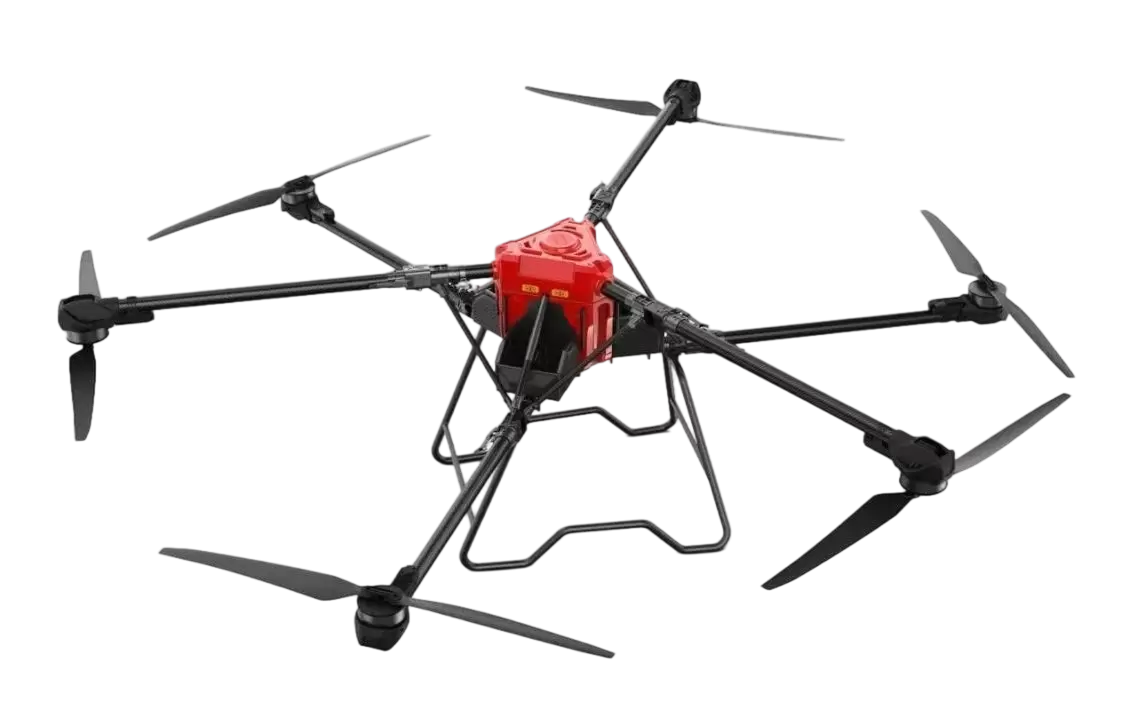
Power Demand Characteristics in Emergency Drone Operations
Fire and rescue missions impose variable and often extreme power demands.
Typical power consumption factors include:
Continuous hover under payload load
High-intensity lighting systems
Real-time data transmission
Environmental resistance such as wind or heat updrafts
Unlike standard aerial photography drones, rescue drones must sustain stable output over extended periods.
Battery System Architecture and Performance Metrics
Most fire and rescue drones use high-capacity lithium battery systems designed for high discharge rates.
Key parameters include:
Nominal voltage typically ranging from 44V to 60V depending on system design
Capacity ranging from 10,000 mAh to 30,000 mAh
Continuous discharge rates exceeding 10C for high-load conditions
Battery performance directly affects:
Maximum flight time
Payload capacity
System stability under peak load
Endurance Optimization Through Energy Management
Achieving longer flight times requires optimization at multiple system levels.
Strategies include:
Efficient motor design to reduce energy consumption
Optimized propeller aerodynamics for lift efficiency
Intelligent power distribution across subsystems
Energy efficiency improvements can extend flight time by 20–40% in practical scenarios.
Thermal Impact on Battery Performance
High-temperature environments significantly affect battery efficiency.
Thermal challenges include:
Increased internal resistance leading to voltage drop
Accelerated capacity degradation over repeated cycles
Safety risks under extreme heat exposure
Advanced battery systems incorporate:
Thermal insulation layers
Active temperature monitoring via BMS
Overheat protection mechanisms
Redundancy and Reliability in Power Systems
Mission-critical operations require redundancy to prevent system failure.
Fire and rescue drones often include:
Dual battery configurations for backup power
Redundant power distribution circuits
Fail-safe landing mechanisms in case of power loss
Redundancy ensures operational continuity even in partial system failure scenarios.
Charging Efficiency and Operational Turnaround
In high-frequency deployment environments, charging speed is a key operational factor.
Fast charging systems enable:
Reduced downtime between missions
Higher fleet utilization rates
Improved response readiness
Charging optimization must balance speed with battery longevity to avoid accelerated degradation.
Integration with Propulsion Systems
Power systems and propulsion systems are closely linked.
High-efficiency brushless motors reduce power consumption while maintaining thrust output.
Jiangxi BonSure Technology Co., Ltd. focuses on high-performance motor systems that improve energy efficiency and extend operational endurance.
Application Scenarios Requiring Extended Endurance
Wildfire monitoring requires continuous aerial surveillance over large areas.
Search and rescue missions demand prolonged flight time to cover wide search zones.
Disaster response operations require sustained observation and communication support.
Conclusion
In fire and rescue drones, endurance is not simply a function of battery capacity but a result of system-wide energy optimization.
Battery architecture, thermal management, propulsion efficiency, and redundancy design all contribute to mission reliability.
With continuous advancements in power systems and motor efficiency from manufacturers like Jiangxi BonSure Technology Co., Ltd., fire and rescue drones are becoming more capable of sustaining long-duration operations in demanding environments.