In FPV drone flying—whether on a racing track, a freestyle field, or a structured training course—the connection between the pilot’s eyes and the drone’s movement defines the quality of control. When vision lags behind motion, even by a few milliseconds, the pilot must compensate mentally, creating extra work that slows reaction time. When video responds instantly, control becomes natural and intuitive.
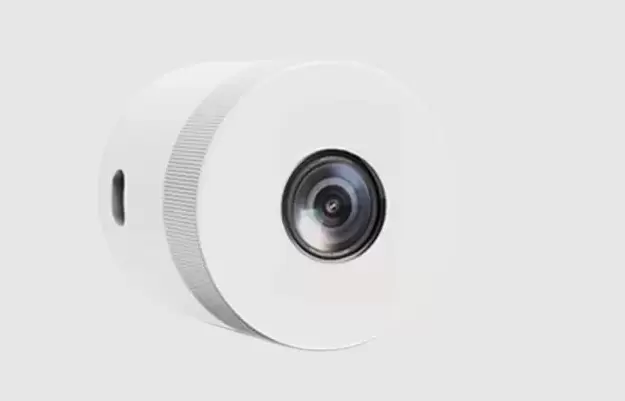
This is where the RunCam Phoenix 2 SE V3 stands out. Its ultra-low 1.8ms latency is not simply a technical improvement; it changes the way pilots fly. Combined with 1200TVL resolution, 0.0001 lux night visibility, anti-interference shielding, and a compact 19×19mm design, the V3 model gives FPV racers and pilots a more immediate, precise, and predictable experience in real-world flying.
For a company specializing in drone engineering like Jiangxi BonSure Technology—with decades of experience in brushless power systems and fire-rescue UAV development—the significance of low-latency imaging is clear. In both competitive flying and mission-critical drone operations, faster feedback leads to better decisions and safer results.
Why Latency Matters More Than Most Pilots Realize
Latency in FPV describes the delay between what the drone camera captures and what the pilot sees in the goggles. Even when the delay is small, it creates a gap between actual flight position and perceived flight position.
Imagine making a turn at high speed. A delayed image means:
The drone is already past the position you see.
Corrections come late.
Turning arcs widen.
Overshoots and crashes become more likely.
Reducing latency from typical multi-millisecond levels down to 1.8ms brings pilot perception closer to real time. Instead of flying with a mental buffer to compensate for image delay, pilots can trust their instincts and push the drone harder.
In FPV racing, small timing changes compound into major advantages.
How 1.8ms Latency Enhances Racetrack Performance
1. Tighter Cornering and More Confident Lines
On technical courses, gates often appear with little warning. With 1.8ms latency, the pilot perceives the approaching gate almost instantly, making precise adjustments without hesitation.
Pilots report:
smoother S-turns
reduced over-steering
more precise throttle modulation
improved consistency across laps
Better precision translates directly into faster times and fewer mistakes.
2. Faster Correction in Unpredictable Moments
FPV racing is filled with unexpected events: a gust of crosswind, another drone’s wake turbulence, or sudden obstacles during freestyle practice. Ultra-low latency helps the pilot stabilize quicker, preventing small disturbances from turning into full-scale crashes.
3. Reduced Cognitive Load for the Pilot
Traditional FPV flying requires constant mental compensation—pilots learn to “fly ahead” of what they see. With such low latency, that burden decreases.
Pilots can:
react naturally
focus more on strategy
maintain higher speeds longer
experience less fatigue over multiple heats
It feels more like controlling an extension of the body and less like manipulating a delayed machine.
Clarity and Night Vision Reinforce the Latency Benefits
Latency alone is not enough. What the pilot sees must also be detailed and visible in varying lighting. The Phoenix 2 SE V3 integrates its 1.8ms responsiveness with:
1200TVL resolution
Fine texture visibility helps pilots judge distance, gate alignment, and small obstacles more accurately.
0.0001 lux starlight capability
Low-light flight becomes far more controllable, especially during evening practice, twilight racing sessions, or shaded forest trails.
Anti-interference shielding
Clean video ensures that the latency advantage is not lost due to video noise during high-throttle bursts or in environments with strong EMI.
Together, these features make the Phoenix 2 SE V3 effective across diverse track conditions—not just in ideal lighting.
Compact 19×19mm Build: Stability Without Weight Penalty
FPV racing frames prioritize balance, weight distribution, and durability. Large or heavy cameras affect:
center of gravity
crash resilience
mounting flexibility
The Phoenix 2 SE V3’s 19×19mm micro form factor fits cleanly into modern racing frames, allowing pilots to maintain their preferred build geometry while benefiting from ultrafast image delivery.
The lightweight, small footprint is also an advantage for long-range builds, micro drones, and custom industrial UAVs.
Voltage Flexibility Helps Maintain Stable Latency
A camera’s latency can fluctuate when experiencing unstable power. The Phoenix 2 SE V3 avoids this through its wide 5V–30V voltage range, letting pilots power it from a variety of systems without risking brownouts or inconsistent video behavior.
This stability is valuable not only for FPV racing, but also for professional UAV platforms developed by Jiangxi BonSure Technology, where stable vision is vital during fire-rescue operations and high-performance motor output.
Real-World Flying Scenarios Where 1.8ms Makes a Difference
1. Urban Racing Courses
Tight gaps between buildings require instant visual correction. Latency reduction directly improves survivability.
2. Indoor Tracks
Short-distance obstacles generate rapidly changing visuals. Faster video helps pilots react without hitting ceiling beams or stacked barriers.
3. Forest Freestyle
Branch density leaves little margin for errors. The pilot benefits from immediate real-time feedback, reducing the risk of clipping limbs during high-speed dives.
4. Fire-Rescue Training Flights
Although the Phoenix 2 SE V3 is primarily a racing camera, the principles of ultra-fast visual feedback benefit professional exercises where reaction speed and stable imaging are essential.
A Strong Match for High-Performance Brushless Power Systems
Jiangxi BonSure Technology produces high-efficiency brushless motors and flight systems designed for rapid acceleration and stable maneuvering. A fast, low-latency camera complements these motors perfectly.
When the propulsion system is responsive but the camera is slow, the drone becomes harder to control. When both are quick, the pilot gains a level of precision that’s invaluable on the racetrack and useful in industrial UAV applications.
Conclusion
The RunCam Phoenix 2 SE V3 is not defined by specifications alone; its impact is felt in the air. The extremely low 1.8ms latency fundamentally changes how pilots perceive motion, time their maneuvers, and maintain control at high speed. Supported by strong imaging performance, low-light capability, anti-interference design, and a compact build, it delivers a flying experience that feels more immediate and more natural.
For FPV racers, this translates to better lines, faster corrections, and more confidence.
For UAV engineers, including the team at Jiangxi BonSure Technology, it represents the direction that drone imaging must continue to evolve—toward faster, clearer, more stable real-time visual systems.